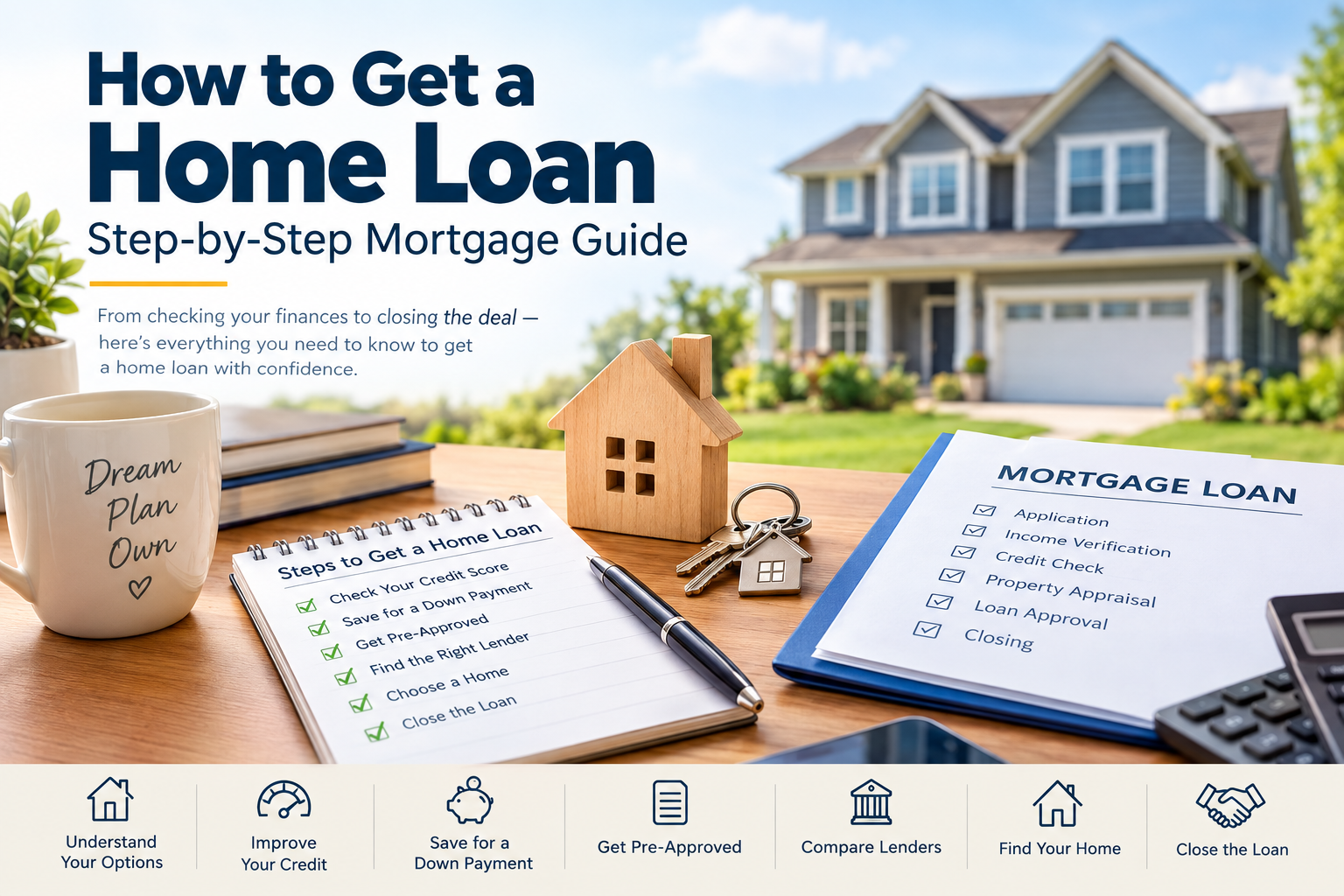
Buying a home is one of the biggest financial decisions most people make. For many buyers, paying the entire purchase price in cash is not realistic, which is why home loans, also called mortgages, are so important. A home loan allows you to borrow money from a lender to purchase a property and repay that money over time, usually with interest.
Understanding how home loans work before applying can help you prepare your finances, compare lenders, and understand the costs involved. A mortgage is more than simply a monthly payment. Your interest rate, loan term, down payment, closing costs, insurance, taxes, and other expenses can all affect the total cost of buying a home.
What Is a Home Loan?
A home loan is a type of secured loan used to purchase real estate. The property itself generally serves as collateral for the loan. You make regular payments according to the terms of your mortgage agreement.
Most mortgage payments include principal and interest. Depending on the loan and property, your monthly payment may also include amounts for property taxes and homeowners insurance.
The principal is the amount you borrowed. Interest is the cost charged by the lender for allowing you to use the money. Over the life of a mortgage, the amount of interest you pay can be substantial, so comparing loan offers is important.
How Much Home Can You Afford?
One of the biggest mistakes first-time buyers can make is focusing only on the home’s purchase price. A home comes with many additional expenses.
Your housing budget may need to account for mortgage principal and interest, property taxes, homeowners insurance, mortgage insurance when applicable, utilities, maintenance and repairs, and homeowners association fees.
A lender may approve you for a certain loan amount, but that does not necessarily mean you should borrow the maximum amount available. Your personal budget should also account for savings, emergency expenses, transportation, food, and other financial obligations.
Why Your Credit Matters
Your credit history can affect the mortgage products and interest rates available to you. Lenders generally review your credit profile, income, debts, employment information, and other financial details when evaluating a mortgage application.
Before applying for a home loan, review your credit reports and check for inaccurate information. Paying bills on time, keeping debt manageable, and avoiding unnecessary new borrowing may help you maintain a stronger credit profile.
Understanding the Down Payment
A down payment is the portion of the home’s purchase price you pay upfront rather than financing through the mortgage.
A larger down payment can reduce the amount you need to borrow. However, buyers should not automatically use every dollar of savings for a down payment. Keeping money available for emergencies, closing expenses, moving costs, and future repairs can also be important.
The amount required depends on the mortgage program, lender, borrower, and circumstances.
What Is Mortgage Insurance?
Mortgage insurance may be required depending on the type of loan and the size of your down payment. For many conventional mortgages, borrowers who put down less than 20% may have private mortgage insurance.
Mortgage insurance generally protects the lender rather than the borrower and can increase the overall cost of the mortgage. Requirements and cancellation rules depend on the loan type.
Fixed-Rate vs. Adjustable-Rate Mortgages
A fixed-rate mortgage generally keeps the interest rate stable according to the terms of the loan. This can make principal-and-interest payments easier to plan for.
An adjustable-rate mortgage, or ARM, can have an interest rate that changes after an initial period according to the loan’s terms. This means future payments may change.
Neither structure should be evaluated only by its initial monthly payment. Buyers should understand how the loan works throughout the expected period of ownership.
Don’t Ignore Closing Costs
Closing costs are expenses associated with completing the home purchase and mortgage transaction. They can include lender charges, certain third-party services, government-related charges, prepaid amounts, and other expenses.
Before closing, carefully review your Loan Estimate and later your Closing Disclosure. Compare the numbers with what you originally expected and ask your lender about anything you do not understand.
Compare Multiple Mortgage Offers
Shopping around can help you understand the range of available loan terms. Compare lenders using more than just the advertised interest rate.
Look at annual percentage rate, interest rate, loan term, estimated monthly payment, origination charges, closing costs, mortgage insurance, prepayment terms, and other lender fees.
The goal is to understand the complete cost of borrowing.
Final Thoughts
A home loan can make homeownership possible, but it also creates a long-term financial obligation. Before signing a mortgage, understand the interest rate, monthly payment, loan term, fees, insurance, taxes, and repayment requirements.
Take time to compare options and make sure the payment fits comfortably within your overall budget. A mortgage should be considered as part of your complete financial plan rather than as an isolated monthly expense.
This article is for educational purposes and is not personalized financial, legal, tax, or mortgage advice.