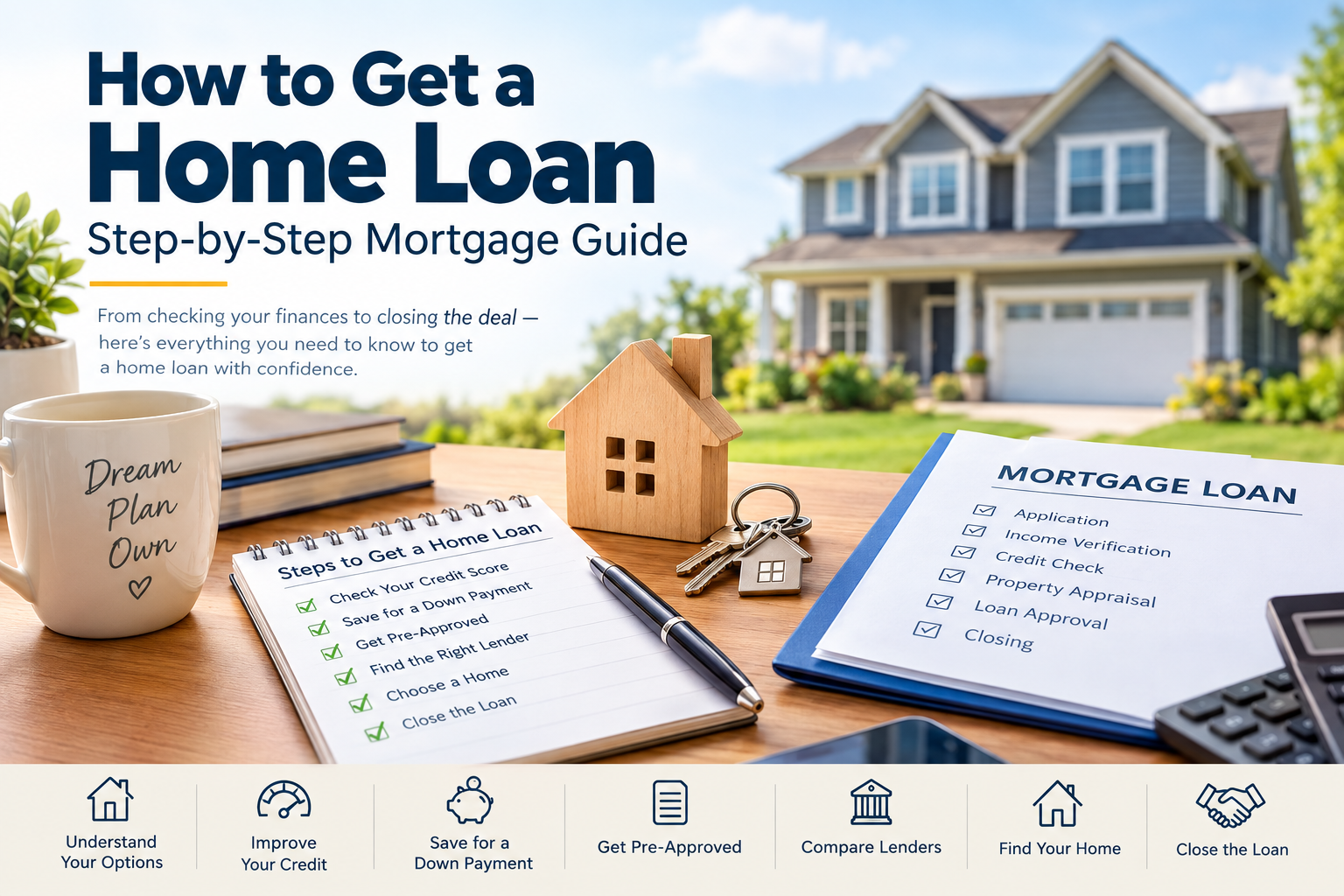
Getting a home loan can seem complicated, especially for first-time buyers. The process involves preparing your finances, comparing mortgage options, submitting documentation, receiving loan estimates, completing underwriting, and eventually closing on the property.
Understanding the process before you begin can make the experience easier to manage.
Step 1: Review Your Financial Situation
Before applying, look at your income, savings, existing debts, monthly expenses, and credit history.
A mortgage is a long-term commitment, so you should consider whether the expected housing costs fit comfortably into your overall budget.
Step 2: Check Your Credit
Mortgage lenders generally consider your credit information when evaluating your application.
Review your credit reports for errors and understand your existing debts. If you find inaccurate information, consider addressing it before applying.
Step 3: Save for Upfront Costs
Buying a home requires more money than the down payment alone.
Potential upfront costs can include down payment, closing costs, inspection, appraisal, prepaid taxes, insurance, moving expenses, and initial repairs.
Step 4: Compare Mortgage Options
There are multiple types of mortgage products.
Depending on eligibility and circumstances, buyers may encounter conventional loans and government-backed programs.
You should compare interest rates, APRs, fees, down payment requirements, mortgage insurance, loan terms, and other conditions.
Step 5: Get Preapproved
A preapproval can help you understand how much financing a lender may be willing to provide based on the information reviewed.
It can also help you establish a realistic home-shopping range.
However, a preapproval is not the same as a final mortgage approval. The property and final application still need to meet applicable requirements.
Step 6: Find a Home
Once you understand your financing position, you can begin searching for a property.
Remember to consider property taxes, insurance, HOA fees, maintenance, utilities, potential repairs, and flood or disaster risks.
Step 7: Apply for the Mortgage
Once you have a property under contract, you will generally provide financial documentation to your lender.
Documents may include income information, bank statements, identification, employment information, debt details, and other documents requested by the lender.
Step 8: Review the Loan Estimate
The Loan Estimate provides important information about the proposed mortgage, including loan terms and estimated costs.
Review it carefully. If something looks different from what you expected, ask the lender for an explanation.
Step 9: Arrange Homeowners Insurance
Mortgage lenders typically require homeowners insurance.
Shop around and compare quotes before closing. Confirm that your selected policy satisfies lender requirements.
Step 10: Complete the Closing
At closing, you will review and sign the final documents and pay required closing amounts.
Before signing, make sure you understand the final numbers.
Final Thoughts
Getting a home loan requires preparation. Checking your finances, understanding your credit, saving for upfront costs, comparing lenders, reviewing the Loan Estimate, and carefully examining final documents can all help you understand the transaction.
Do not rush simply because you have found a property. A mortgage can affect your finances for many years, so understanding the agreement before signing is essential.
This article is general educational information and does not provide personalized mortgage advice.